
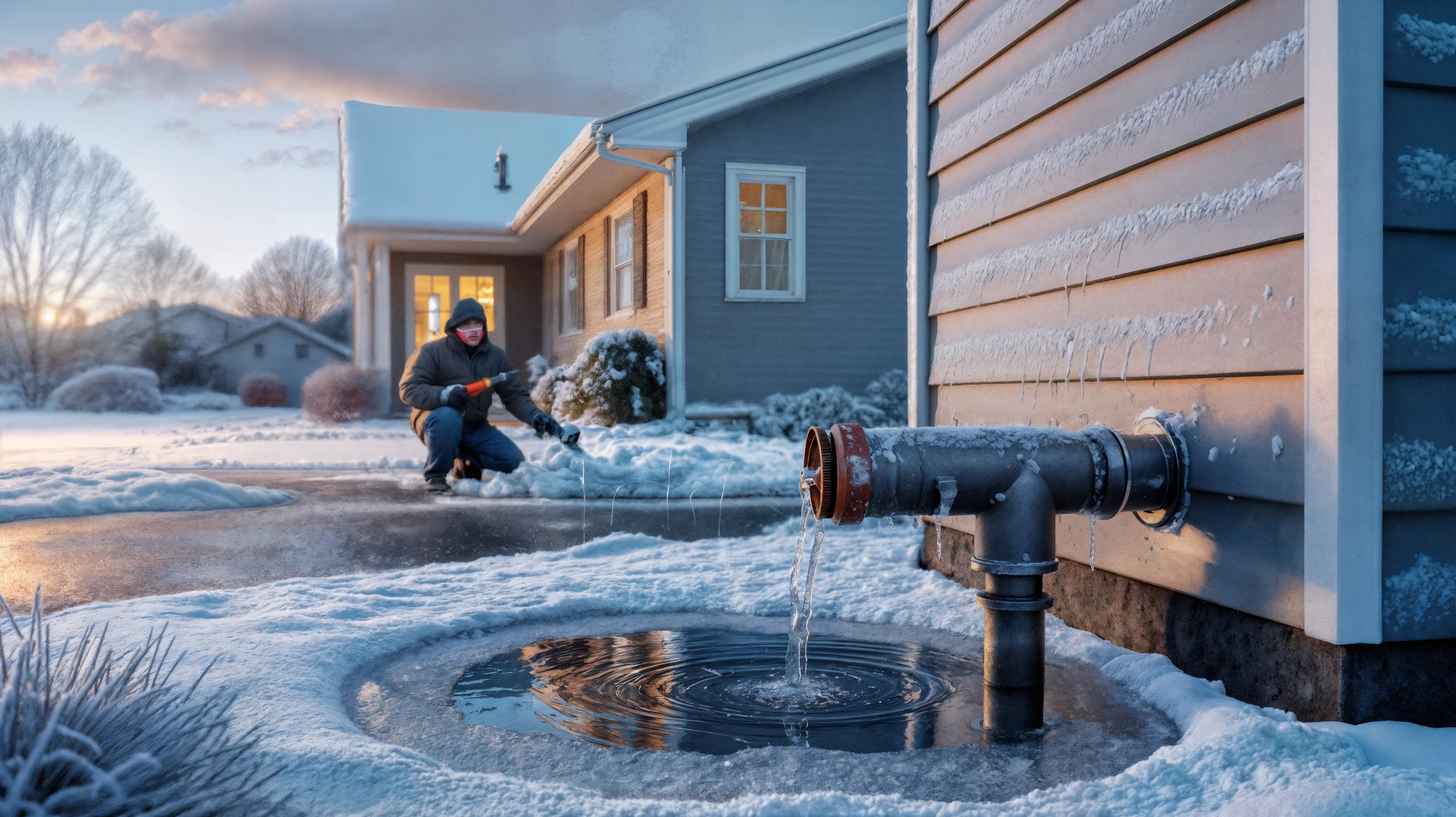
Maryland winters can be beautiful, but they’re also tough on our homes. One day you’re enjoying a mild afternoon, and the next a sudden freeze hits. This kind of roller-coaster winter weather is notorious for causing burst pipes, ice dams, and other costly water damage in Maryland. The good news is a little preparation goes a long way. As a seasoned local contractor, I’ve seen it all, frozen plumbing, leaky roofs, flooded basements, and I’m here to share practical tips to protect your home. In this article, we’ll cover the most common causes of winter water damage in Maryland (from frozen pipes to ice dams, snowmelt, attic leaks, and gutter backups) and explain how to prevent them. Grab a cup of coffee, and let’s get your Maryland home ready for whatever winter throws our way.
Frozen Pipes
When temperatures plummet, exposed water pipes are at risk of freezing solid. Water expands as it turns to ice (about 9% increase in volume), which creates immense pressure inside your plumbing. That pressure can rupture a pipe joint or split a pipe wall, sending water gushing out when things thaw. The result? Flooded rooms and a big headache. Pipes in unheated areas, like crawl spaces, attics, garages, or against exterior walls, are especially prone to freezing. Early signs of a freeze include little to no water flow at a faucet (just a trickle when you turn it on) or even frost on the outside of a pipe. If you catch it early, you might prevent a burst.
How to prevent frozen pipes: There are several steps you can take to protect your plumbing during Maryland cold snaps:
- Insulate exposed pipes. Wrap foam pipe insulation around pipes in unheated spaces like basements, attics, and exterior walls. Don’t forget crawlspace pipes and garage lines. Proper insulation keeps the cold out and heat in.
- Disconnect garden hoses and drain outdoor faucets. This simple fall chore is crucial. Any water left in an exterior hose or spigot can freeze and burst the pipe behind it. Detach all hoses, shut off the exterior water supply (via the indoor valve), and drain the faucet before winter.
- Keep your home heated (even when away). Make sure to keep your thermostat at a minimum of 55°F, even if you’re not home. Consistent warmth throughout the house helps prevent hidden pipes from freezing. It’s also wise to open interior doors and bathroom/kitchen cabinet doors to allow warm air to circulate around pipes under sinks.
- Let faucets drip during deep freezes. On very cold nights, let a couple of faucets (preferably on exterior walls) drip slightly. A small trickle of water keeps it moving through the pipes, which makes it much less likely to freeze. This also relieves pressure in case part of the line does ice up.
If you suspect a pipe is starting to freeze (for example, a faucet stops flowing or you see frost on a pipe), act quickly. Turn up the heat, open taps, and cautiously warm the pipe with a hair dryer or space heater (never an open flame). If a pipe does burst, shut off your main water valve immediately and call a professional. Premier Restoration Services offers 24/7 emergency help for burst pipes and can guide you through cleanup and repairs, but of course we’d rather help you prevent the disaster in the first place!
Ice Dams
Ever notice those long icicles hanging from a home’s gutters or roof edge in winter? That pretty sight can spell trouble. Icicles often mean an ice dam is forming. An ice dam is a ridge of ice along the eaves of the roof that blocks melting snow from draining off. Here’s how it happens: After a Maryland snowstorm, heat leaking from your attic can warm the roof and melt the underside of the snow pack. The water runs down to the colder roof edge and refreezes, gradually building a dam of ice. As more snow melts, the trapped water backs up behind the ice dam and can seep under your shingles. The next thing you know, you’ve got water dripping into your attic or running down your walls. Ice dams have caused countless roof leaks and water damage in Baltimore homes over the years.
How to prevent ice dams: The key is keeping your roof cold and letting snow melt safely away. Tackle it from both inside and outside:
- Improve attic insulation and seal leaks. Too much heat escaping into your attic is what causes ice dams in the first place. Make sure your attic floor is well-insulated (aim for the recommended R-value for our region) and seal up any gaps where warm air can leak into the attic (around light fixtures, pipes, the attic hatch, etc.). This keeps the attic cooler so the roof stays cold. Bonus: it’ll also reduce your heating bills and prevent attic condensation problems (more on that later).
- Ensure proper attic ventilation. Good ventilation helps maintain a cold, dry attic. Soffit and ridge vents allow cold outside air to circulate under the roof, preventing hot spots that create meltwater. Check that your vents aren’t blocked by insulation and consider installing additional vents if your attic runs warm. A well-ventilated attic in winter should be a similar temperature to the outdoors.
- Clear snow from the roof (safely). If you get a heavy snowfall, use a roof rake to pull snow off the eaves from the ground while it’s fresh and fluffy. Removing the bulk of the snow greatly reduces the amount that can melt and refreeze. Never climb onto an icy roof yourself. If you can’t reach safely with a long-handled rake, hire a professional service to clear it.
- Keep gutters and downspouts clean. Clogged gutters can make ice dam problems worse by trapping meltwater. Clean your gutters in the fall and consider gutter guards to keep debris out. Open, clear gutters give melting snow a path to drain away from your house instead of refreezing at the roof’s edge. Also ensure downspouts direct water well away from your foundation.
Watch for warning signs of ice dams: large icicles, ice build-up at the roof edge, or water stains on interior ceilings in late winter. If an ice dam does form and start leaking, you may need to call in professionals to remove the ice dam safely. Premier Restoration Services can help inspect the damage, dry out your property, and even recommend trusted roofers for permanent fixes. Don’t wait, because prolonged leaks can lead to mold and structural issues.
Snowmelt and Roof Runoff
Snow itself isn’t a liquid threat, but when it melts it can create a surge of water around your home. Maryland often sees cycles of snow followed by warmer days or rain, leading to rapid snowmelt. When a big snowpack on your roof or lawn turns to water, that water has to go somewhere. If your drainage systems aren’t up to the task, you could end up with water seeping into unwanted places.
One common issue is roof runoff overwhelming the gutters. If your gutters and downspouts are clear, they’ll catch melting snow and send water away from the house. But if they’re clogged or frozen, meltwater may spill over the sides and find its way under shingles or into the ground by your foundation. Similarly, if you have a lot of snow piled up around the foundation and it melts quickly, that water can leak through basement walls or flood low spots in your basement. In late winter, the ground in Maryland can be frozen hard, which prevents water from soaking into the soil – so the water takes the path of least resistance, sometimes right into your cellar. We’ve responded to plenty of calls about flooded basements in Maryland caused by nothing more than a fast thaw after a big snow.
How to manage snowmelt: Before and after a snowstorm, take steps to channel melting snow away from your home:
- Clear snow away from your foundation. After a heavy snowfall, once it’s safe to do so, shovel accumulated snow away from the perimeter of your house. Create a gap so that when it melts, the water won’t be right against your foundation.
- Maintain your gutters and downspouts. As mentioned earlier, clear gutters allow runoff to flow. Make sure downspout extensions are directing water at least several feet away from your foundation on all sides. You want meltwater moving out toward the yard or street, not pooling by your basement walls. If downspouts dump water too close, consider adding extensions (even a temporary flexible hose in winter).
- Check exterior drains and grading. Ensure that storm drains, driveway drains, and yard drains (if you have them) aren’t buried in snow or ice. Clear them so they can carry water away. Also take note of how your yard is graded – the soil should slope away from your home. In the fall, adding a bit of topsoil near the foundation can create a “negative slope” that helps spring melt run off in the right direction.
- Be ready with your sump pump. If you have a sump pump in the basement, test it before winter and after big snows. A thaw can really put your sump to work. You want to be sure it’s operational when that water starts seeping under the foundation. Consider a battery backup for the pump in case of power outages during winter storms.
Maryland homeowners know that one day we can have 10 inches of snow, and a week later it’s 55°F and sunny. Planning for that freeze-thaw whiplash is part of protecting your property. A bit of smart snow management will prevent a lot of moisture problems when things warm up.
Attic Leaks and Condensation
Not all winter leaks come from outside water – sometimes the culprit is humidity and poor ventilation inside your home. Attic leaks in winter often turn out to be a result of attic condensation rather than a roof defect. Here’s what happens: Warm, moist air from your living spaces rises up into the attic (especially if your attic floor isn’t sealed tight). When that humid air hits the cold roof decking, it condenses into water droplets – just like moisture beading up on a cold glass of water. Those droplets can soak insulation and wood framing. Over time, enough condensation can mimic a roof leak, dripping onto your ceiling or causing mold and rot in the attic. The conditions that cause ice dams (escaping heat and lack of insulation) often cause attic condensation as well.
How to prevent attic moisture issues: The goal is to keep warm moist air out of the attic and maintain good airflow:
- Seal attic bypasses and improve insulation. Most homes have small gaps where light fixtures, plumbing vents, or chimneys pass into the attic. Seal these openings with caulk or expanding foam to stop air leaks. Make sure your attic insulation is sufficient and evenly distributed. By plugging air leaks and beefing up insulation, you minimize the warm air that reaches the roof. (This also helps prevent ice dams – win-win!)
- Ensure adequate attic ventilation. A well-ventilated attic allows any moisture that does get up there to escape. Check that you have clear soffit vents and roof vents. If you spot signs of condensation (damp wood, mold, or frost in the attic), you might need to add more ventilation or unblock existing vents. Proper ventilation goes hand-in-hand with insulation to keep your attic dry and cold.
- Vent all exhaust fans to the outside. It’s critical that bathroom fans, kitchen range hoods, and dryer vents blow outside, not into the attic. Venting shower steam or cooking moisture into the attic will create a rain forest up there in winter. Inspect your ductwork to confirm it exits through the roof or wall, and fix it if not.
- Monitor indoor humidity. Keep an eye on your home’s humidity levels, especially if you use a humidifier. In winter, an indoor relative humidity around 30-50% is ideal. Much higher than 50% can lead to condensation problems. Use exhaust fans when cooking and bathing, and make sure your clothes dryer is properly vented. If needed, a dehumidifier can help keep indoor moisture in check – just remember to empty it.
By controlling humidity and sealing your attic, you’ll prevent those mysterious “roof leaks” that actually originate from inside. It’s a silent issue many folks don’t notice until the damage is done. Take a peek in your attic once or twice this winter for peace of mind. If you see any signs of moisture (like dark stains, mold, or dripping), address it ASAP or call in an energy audit or insulation pro. It’s cheaper to fix insulation than to replace a rotted roof down the line.
Gutter Backups
Your gutters and downspouts are your home’s drainage highways. In winter, they often face a one-two punch: leftover autumn leaves plus ice and snow. Clogged or frozen gutters cause water to back up, which can send water where it shouldn’t go. We’ve touched on this under ice dams and snowmelt, but it’s worth its own spotlight. When gutters are packed with debris or ice, melting snow has nowhere to drain, so it can spill over the sides and run down exterior walls or puddle around the foundation. Worse, the water can overflow under your roof edge and into the eaves/attic. A backed-up gutter essentially mimics an ice dam’s effects on a smaller scale. And if that water refreezes, the added weight can even rip gutters away from the house.
How to keep gutters flowing: The prescription here is straightforward maintenance:
- Clean gutters before and during winter. Clear out leaves and gunk in late fall, and check again mid-winter if you can do so safely (a warm day can be good for this). Removing debris lets water flow and reduces ice build-up.
- Consider gutter accessories. If your home is prone to gutter clogs, installing gutter guards or screens can help keep debris out. Heated gutter cables are another option if ice is a recurring problem, though they should be installed by a professional. These aren’t necessary for every home, but in some Maryland houses under tall trees or with chronic ice, they can be a worthwhile investment.
- Keep downspouts clear and extended. Make sure your downspouts aren’t blocked with ice or leaves. You can sometimes clear a frozen downspout by pouring a bit of warm (not boiling) water into it or using a heat tape. Also ensure the lower end of the spout directs water away from the house – use extensions if needed, and reposition them if shifting snow knocks them askew. A frozen or blocked downspout can cause water to spill out and pool next to the foundation, where it might freeze and cause damage.
- Inspect for damage after storms. After any big snow or ice event, glance up at your gutter line. Look for sagging gutters, loose brackets, or new icicles forming. Address any issues promptly. Sometimes just clearing an ice blockage or tightening a fastener can prevent a later catastrophe.
By keeping your gutters and downspouts in good shape, you greatly reduce the risk of interior water damage. It’s an easy task to neglect, but it makes a world of difference when the thaw comes.
Stay Prepared and Stay Dry this Winter
Maryland winters can be unpredictable, but with the right preparations, you can head off the most common causes of winter water damage. We’ve talked about frozen pipes, ice dams, snowmelt flooding, attic condensation, and gutter backups – all real threats for Maryland homeowners each winter. The recurring theme is prevention: a bit of effort now will spare you from emergency headaches later.
As a local contractor who’s helped many families recover from winter disasters, my advice is simple: don’t hesitate to take action. Insulate that pipe, clear that gutter, check that attic, and have a plan for extreme cold. If you’re not sure where to start or you’d like an expert eye on your home’s winter readiness, Premier Restoration Services is here to help. We’re based in Maryland and understand the specific challenges our winters bring. Our team can inspect your property for vulnerable spots and even assist with winterizing tasks. And if the worst happens – a burst pipe at 2 AM or a leak you can’t handle – we offer 24/7 emergency water damage response throughout the Baltimore area.
Don’t let winter water damage catch you off guard. With these preparation tips, you can protect your home and enjoy the season with peace of mind. Stay warm, stay safe, and remember that Premier Restoration Services is just a call away for any winter water damage concerns. Here’s to a dry and cozy Maryland winter in your home!


